A council may use AI to find information, draft text, classify documents and support enquiries from residents. A useful starting point is a bounded task whose outcome can be checked, with a manual route and a named owner.
Putting a chat window on a public portal is not enough. The team must know its sources, permissions and relationship to official case files. An error about a cultural event and a recommendation affecting access to a benefit have very different consequences.
This is a technical pilot framework. The legal classification of a use case and the conditions of procurement require review by the competent public officials and advisers.
Possible uses: from internal work to public enquiries
| Area | Possible support | Pilot boundary |
|---|---|---|
| Registration and documents | Suggest document type and receiving unit | Classification does not decide admissibility or deadlines |
| Case files | Find earlier material and draft cited summaries | Keep the original and check omissions |
| Regulations | Locate a provision with its version and source | Do not present a summary as legal advice |
| Culture and tourism | Answer using current municipal programmes | Escalate missing or changed information |
| Resident enquiries | Point to published procedures and documents | Maintain accessible human channels |
| Municipal data | Prepare authorised queries and reports | Validate aggregations and protect individual data |
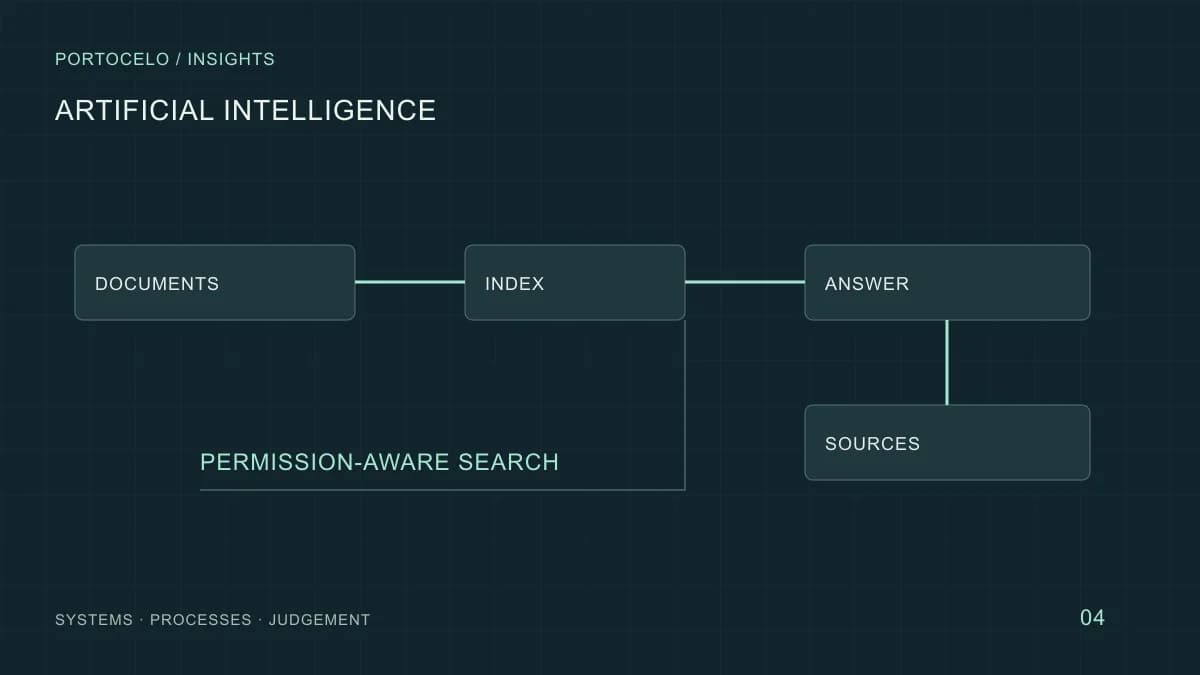
An internal assistant can be easier to control at first: staff know the sources and can test real questions. Permissions still matter. A culture enquiry must not retrieve restricted files from another department. Document intelligence and RAG assistants solve related but distinct tasks.
Eight decisions before expanding a pilot
Each step leaves a decision or evidence for continuing, revising or stopping.
- 1. Identify
Choose a task and describe exceptions.
- 2. Classify data
Separate public, internal and restricted sources.
- 3. Assess risk
Consider effects on people and procedures.
- 4. Bound the pilot
Define inputs, outputs and excluded uses.
- 5. Supervise
Assign review, escalation and stop powers.
- 6. Integrate
Connect identity, records and applications.
- 7. Measure
Compare with the current procedure.
- 8. Decide
Expand, correct or discontinue.
Portocelo’s proposed design framework. A valid result may be that AI is not worthwhile for this task.
Bring together the service unit, IT and the people responsible for data protection, security and procedure where relevant. A one-page scope should name users, sources, permitted operations, excluded data, the owner and acceptance criteria. It should explicitly exclude, for example, issuing a decision or changing an administrative status automatically.
Example of application: routing incoming requests
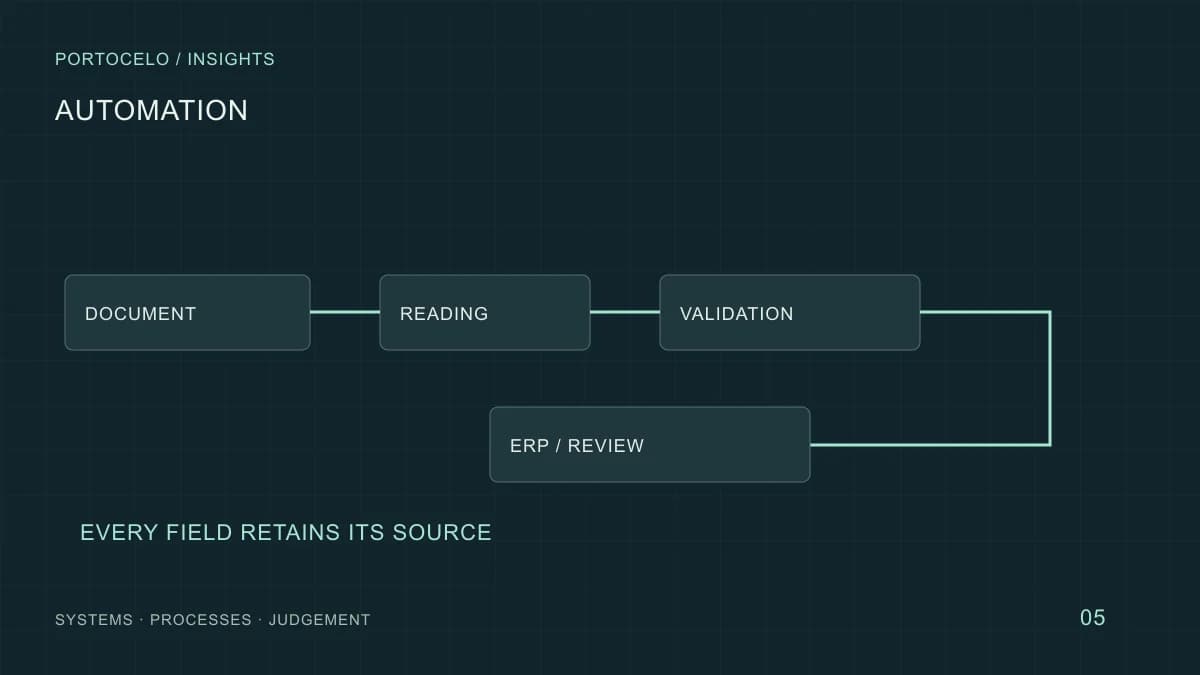
Imagine a unit receiving requests and attachments through an existing channel. A pilot identifies document types and suggests a receiving unit, displaying the supporting passage. When the evidence is insufficient, it returns “undetermined”. It does not alter the official register.
Staff test it first on authorised, minimised copies or representative synthetic material. Include Galician and Spanish documents, scans, mixed-purpose applications and unreadable files. Staff compare suggestions with their usual process and record corrections. Unknown documents go to a review queue.
Data, interoperability and records
An integration must respect user identity, permissions and case identifiers. Copying files to another platform without a link to the source creates competing versions. Decide which system is authoritative and how changes, deletions and access revocations reach the AI index.
A reply about regulations should link to the provision and its effective version. A case summary should allow staff to return to the supporting pages. Check APIs, file exchange, export and exit conditions before selecting a supplier. Technical logs may also contain personal data; limit what they retain and who can access them.
Accessibility and oversight that staff can exercise
A public AI channel should work with a keyboard and assistive technology, explain errors clearly and offer an effective human route. Identify automated interaction where required. Test complete tasks with the staff and people who will use the channel, including zoom and small screens.
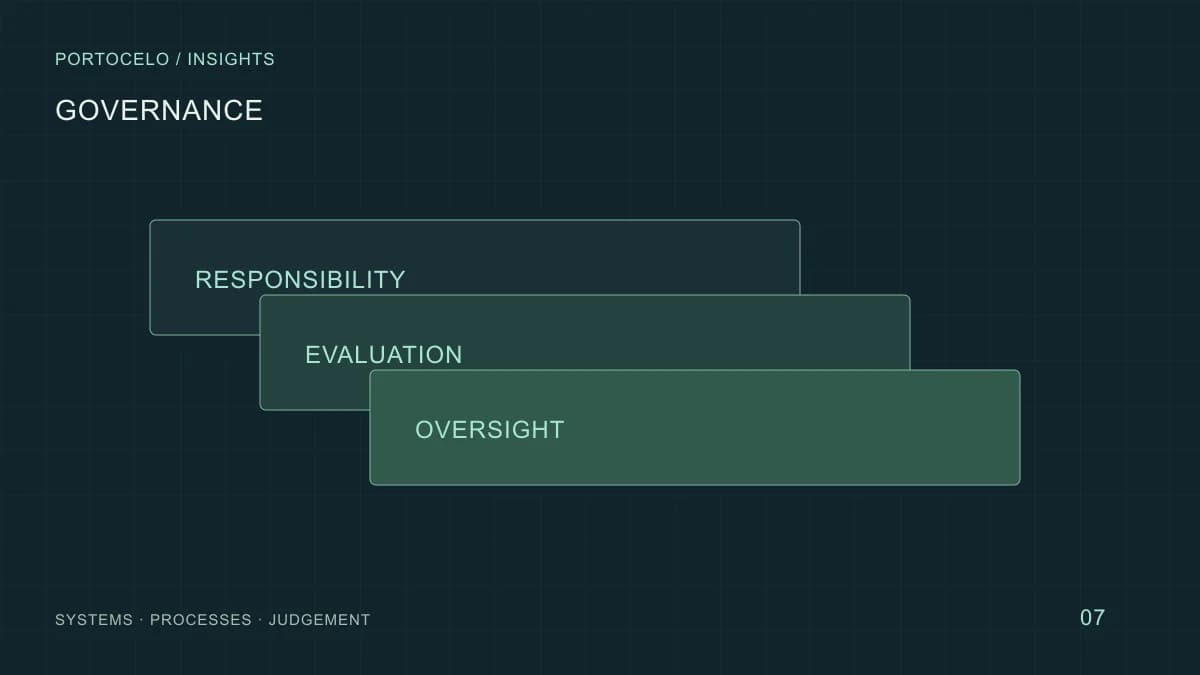
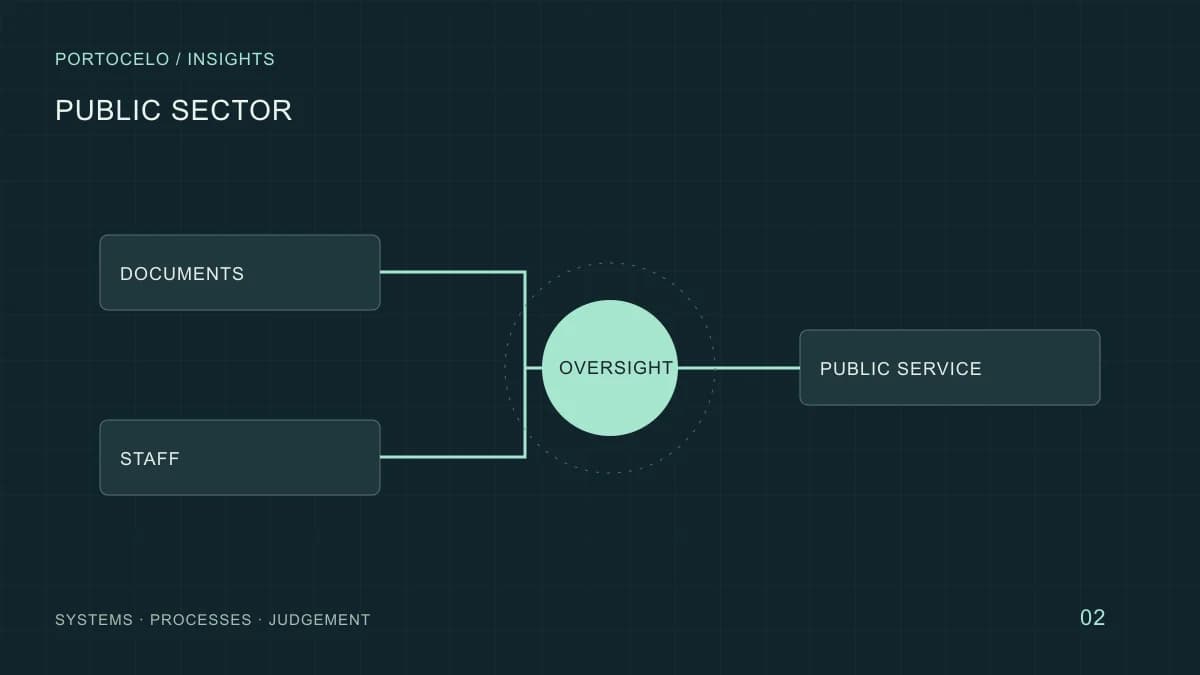
An “accept” button without the source or enough time to inspect it is weak oversight. Reviewers need the proposal, evidence and ability to correct, stop and report an incident. A service outage must not block the ordinary procedure.
- Test representative long documents and accessible formats.
- Train staff on limits, sources, excluded data and exceptions.
- Check that the manual route works when AI is unavailable.
AI Act and data protection: check the specific use
The EU AI Act assigns obligations according to the purpose of a system and the organisation’s role. A municipal tool is not automatically high-risk because a council uses it; uses affecting essential services or people’s rights require particularly careful assessment. Check the applicable provisions and timetable for the actual system against the European Commission guidance.
Maintain an inventory of uses, data, providers, permitted functions and tests. The competent people must define the legal risk assessment, data-protection measures and procurement terms. Portocelo provides technical and governance support, not legal advice. Sources checked on 29 September 2026.
What to request and how to decide whether to continue
Ask for verifiable deliverables: included integrations, test set, review flow, documentation, support and exit conditions. Separate setup cost from usage and maintenance. Agree success criteria before the demonstration.
| Dimension | Evidence | Reason to stop or review |
|---|---|---|
| Quality | Tasks and corrections by type | Repeated critical errors |
| Oversight | Accepted and corrected proposals | Review without sources or context |
| Privacy | Access tests for different roles | One role retrieves another role’s documents |
| Operation | Total time, incidents and review queue | Queue grows beyond review capacity |
| Exit | Export and return to manual workflow | Dependency threatens service continuity |
Count correctly completed tasks, review time, ease of finding information and continuity of service, not just conversations. An unsuccessful AI pilot may still reveal a more valuable records or process improvement. Our public-sector service can help define the scope.
From knowledge to a working process
A well-defined first municipal pilot.
We can help bound the process, prepare the sources and establish a test that staff can evaluate.
Discuss your council’s pilot ↗Sources and references
- EUR-Lex: Regulation (EU) 2024/1689 (AI Act) · Checked:
- European Commission: AI regulatory framework · Checked:
- W3C: WCAG 2.2 · Checked: